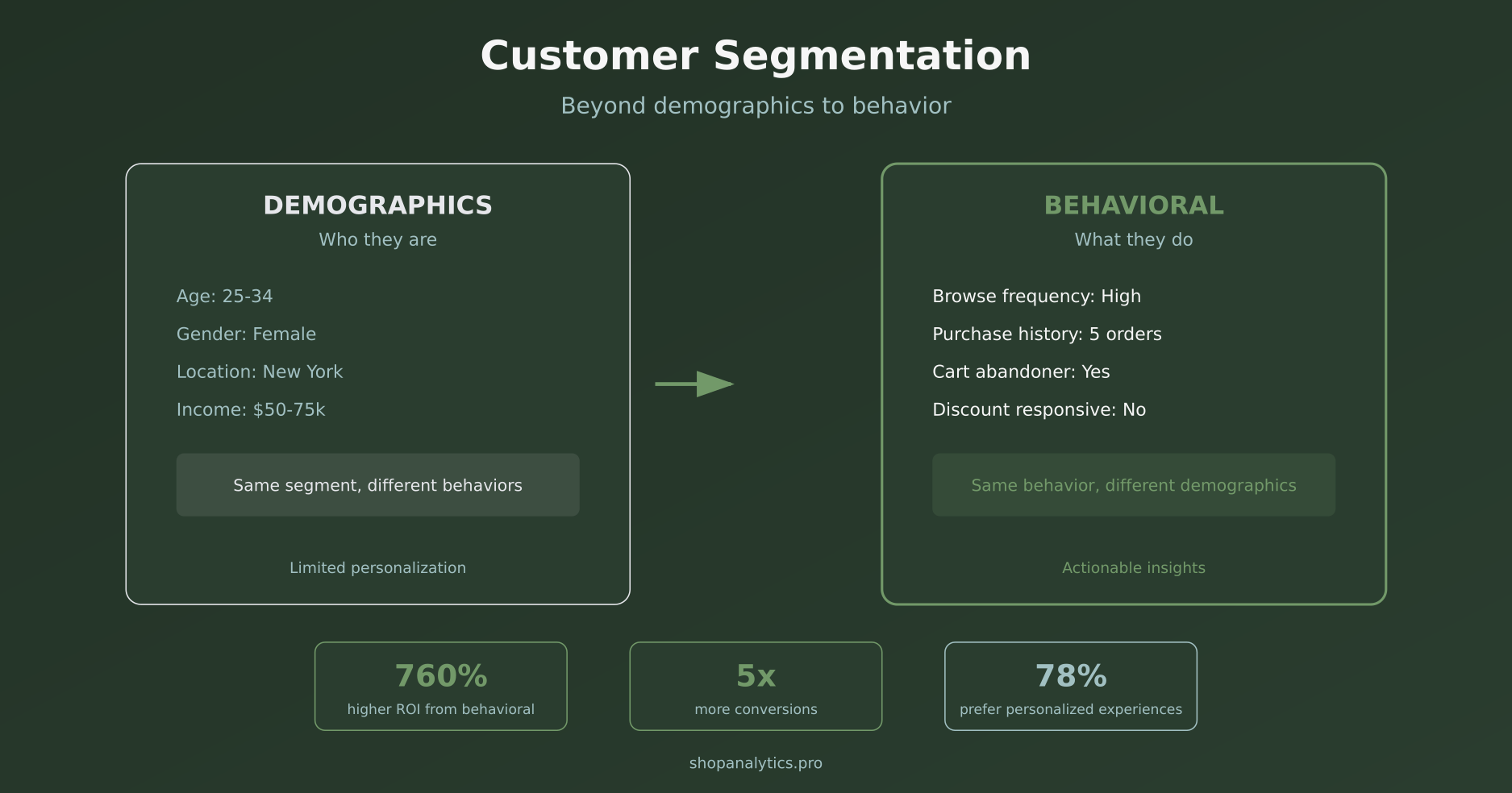
Every visitor to your store is somewhere on a spectrum. Some are just killing time. Others are moments away from entering their credit card. The difference between a good e-commerce operation and a great one is knowing which is which.
Here is the thing: customers leave clues. The pages they visit, the products they linger on, whether they check shipping costs or read reviews – all of these are signals. And when you learn to read them, you can predict who is about to buy and who needs more nurturing.
In this guide, I will show you how to identify purchase intent signals, build a simple scoring system, and match your marketing actions to each customer’s readiness to buy.
What Are Purchase Intent Signals?
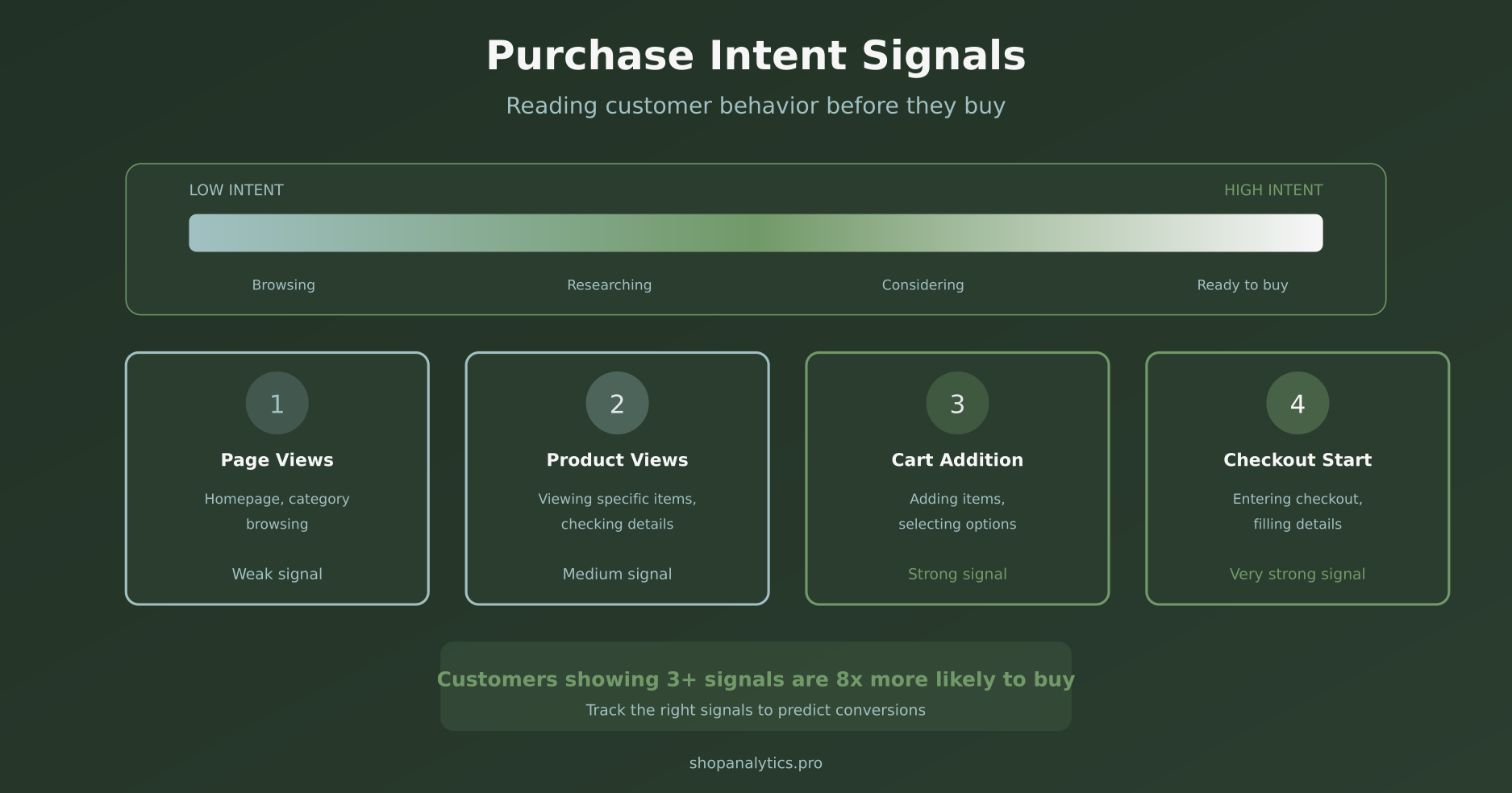
Purchase intent signals are actions that indicate how close a customer is to making a purchase. They range from weak signals like simply visiting your site to strong signals like starting the checkout process.
The key insight is that not all actions are equal. Someone who views a product page once is barely interested. Someone who views the same product three times, checks the size guide, and adds it to their cart is clearly serious about buying.
By tracking these signals and weighting them appropriately, you can:
- Identify your hottest leads and prioritize outreach
- Trigger automated campaigns at the right moment
- Allocate marketing budget more effectively
- Personalize messaging based on buying stage
This connects directly to behavioral customer segmentation – intent signals are the raw data that feeds your segments.
The 15 Purchase Intent Signals You Should Track
Not all signals carry the same weight. Here are the most predictive ones, grouped by strength.
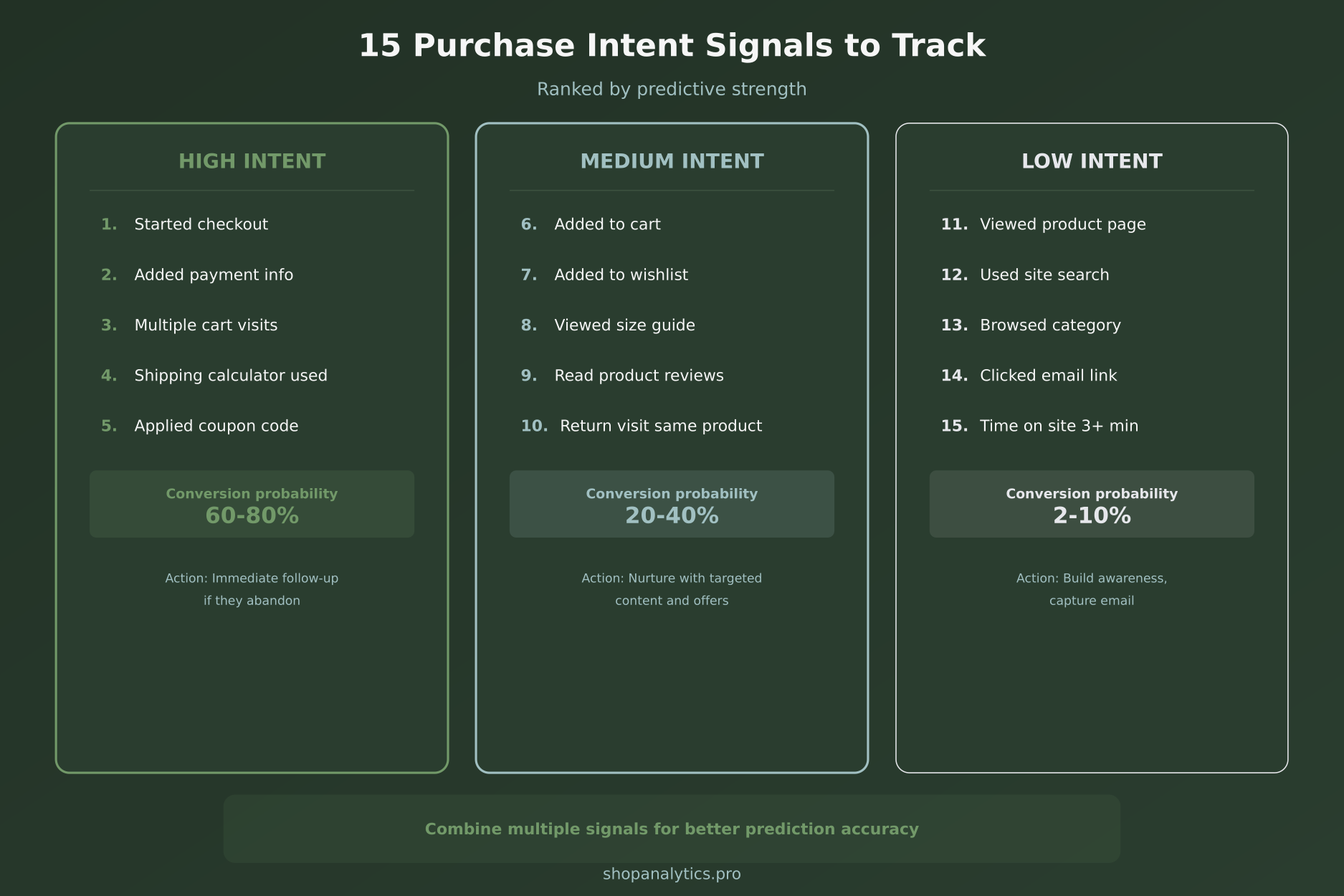
High Intent Signals (60-80% conversion probability)
These signals indicate someone is ready to buy. They have made the decision; now they just need to complete the transaction.
1. Started checkout – The strongest signal. They entered the purchase flow with intent to buy. If they abandon now, you should follow up immediately.
2. Added payment information – They trusted you enough to enter their card details. Something stopped them at the last moment.
3. Multiple cart visits – They keep coming back to look at their cart. They are weighing the decision but clearly interested.
4. Used shipping calculator – Checking delivery costs means they are seriously considering the purchase. They want to know the real total.
5. Applied a coupon code – They are actively trying to get a better deal, which means they want the product enough to hunt for savings.
Medium Intent Signals (20-40% conversion probability)
These customers are in consideration mode. They are interested but not committed yet.
6. Added to cart – Classic intent signal. They selected the product they want. Now you need to move them to checkout.
7. Added to wishlist – Similar to cart but with longer intent. They like it but may be waiting for a sale or need more time.
8. Viewed size guide or specs – They are verifying fit or compatibility. This is research that precedes purchase.
9. Read product reviews – Looking for social proof and validation. They want reassurance before committing.
10. Return visit to same product – Coming back to look at the same item multiple times shows sustained interest.
Low Intent Signals (2-10% conversion probability)
These are early-stage signals. The customer is browsing but has not shown strong purchase interest yet.
11. Viewed product page – Basic interest, but could be casual browsing. Single views mean little on their own.
12. Used site search – They are looking for something specific, which is promising, but search alone does not indicate buying intent.
13. Browsed category pages – Window shopping behavior. They are exploring but have not focused on specific products.
14. Clicked email link – They engaged with your marketing, but clicking is easy. The follow-up behavior matters more.
15. Spent 3+ minutes on site – Longer sessions suggest engagement, but time alone does not predict purchase.
These signals align with the micro-conversions we track to measure the customer journey.
Building a Simple Intent Score
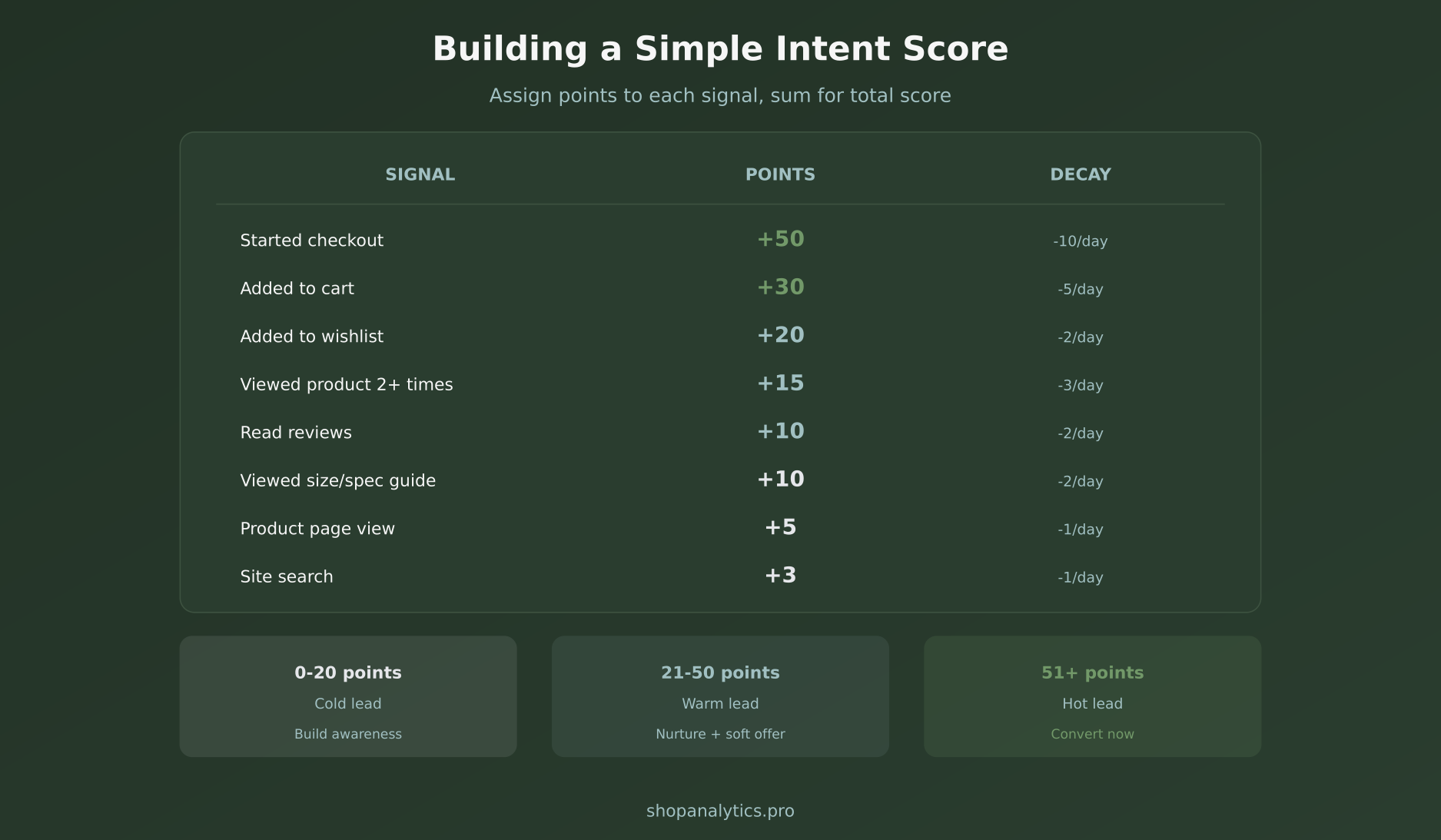
You can turn these signals into a numerical score that makes decision-making easier. Here is a straightforward approach.
Assign Points to Each Signal
Give more points to stronger signals. Here is a sample scoring system:
- Started checkout: +50 points
- Added to cart: +30 points
- Added to wishlist: +20 points
- Viewed product 2+ times: +15 points
- Read reviews: +10 points
- Viewed size guide: +10 points
- Single product view: +5 points
- Site search: +3 points
Apply Time Decay
Intent fades over time. Someone who added to cart yesterday is hotter than someone who did it two weeks ago. Apply a decay rate to keep scores current:
- Checkout started: -10 points per day (intent fades fast)
- Cart additions: -5 points per day
- Wishlist: -2 points per day (intent lasts longer)
- Product views: -1 point per day
Create Score Thresholds
Divide customers into tiers based on their total score:
- Hot leads (51+ points): Ready to convert. Focus your best offers here.
- Warm leads (21-50 points): Interested but need nurturing. Send targeted content.
- Cold leads (0-20 points): Early stage. Build awareness and capture email.
Matching Marketing Actions to Intent Level
Different intent levels need different approaches. Pushing a hard sell to someone who just discovered your brand will backfire. Being too passive with someone ready to buy means losing the sale.
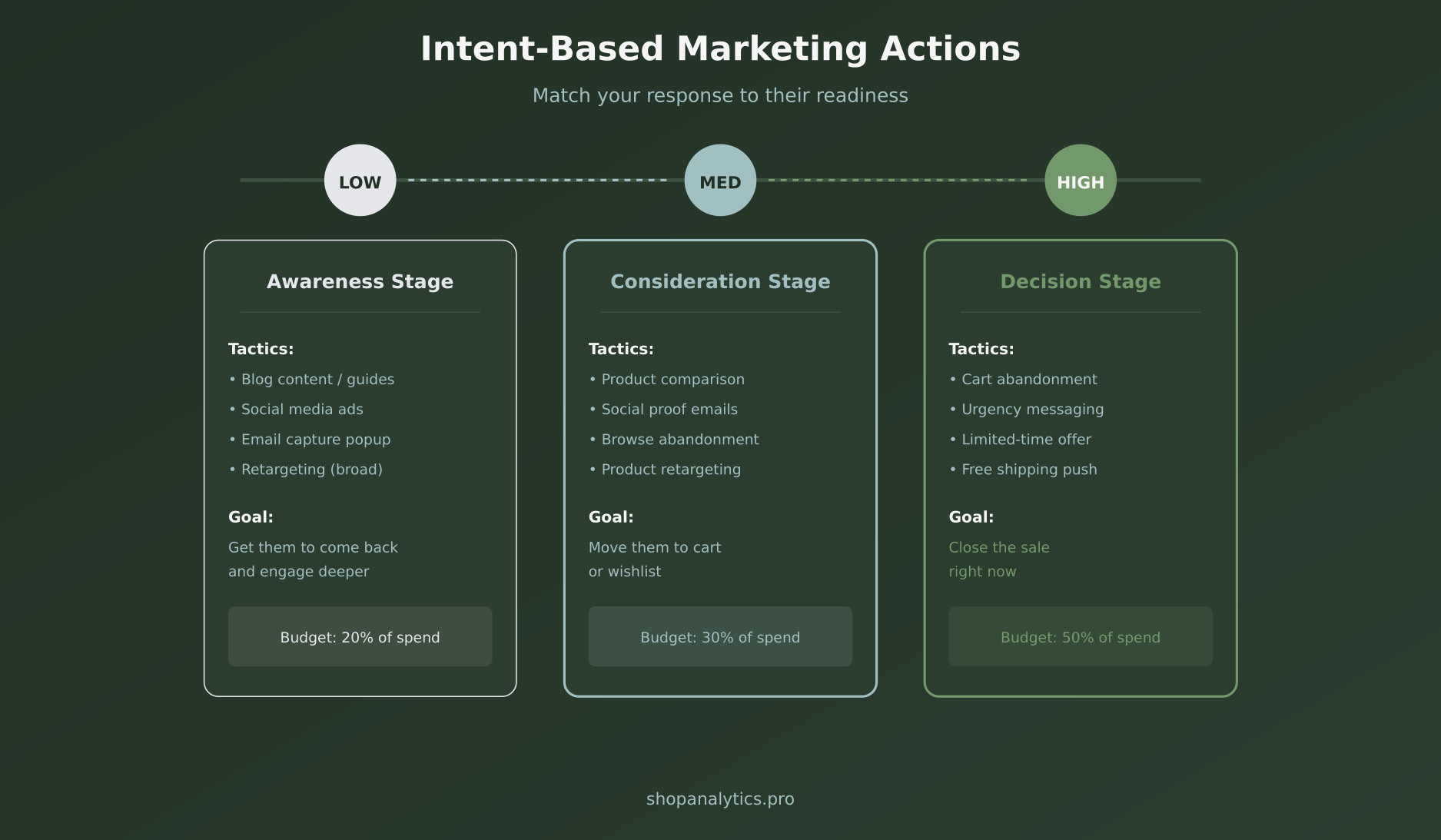
Low Intent: Build Awareness
These visitors are just getting to know you. The goal is to stay on their radar and move them deeper into your funnel.
Tactics:
- Educational blog content that solves their problems
- Broad retargeting ads with brand messaging
- Email capture popups offering value (guides, discounts)
- Social media content that builds trust
Budget allocation: About 20% of your marketing spend
Medium Intent: Nurture and Educate
These customers are actively considering a purchase. They need information and reassurance to move forward.
Tactics:
- Product comparison content
- Social proof emails (reviews, testimonials)
- Browse abandonment campaigns (you looked at X)
- Product-specific retargeting ads
Budget allocation: About 30% of your marketing spend
High Intent: Convert Now
These customers are ready. Your job is to remove any remaining friction and close the sale.
Tactics:
- Cart abandonment recovery sequences
- Urgency messaging (low stock, ending soon)
- Limited-time offers with clear deadlines
- Free shipping thresholds or one-time discounts
Budget allocation: About 50% of your marketing spend – this is where ROI is highest
How to Track Intent Signals in Practice
The technical implementation depends on your stack, but here is the general approach.
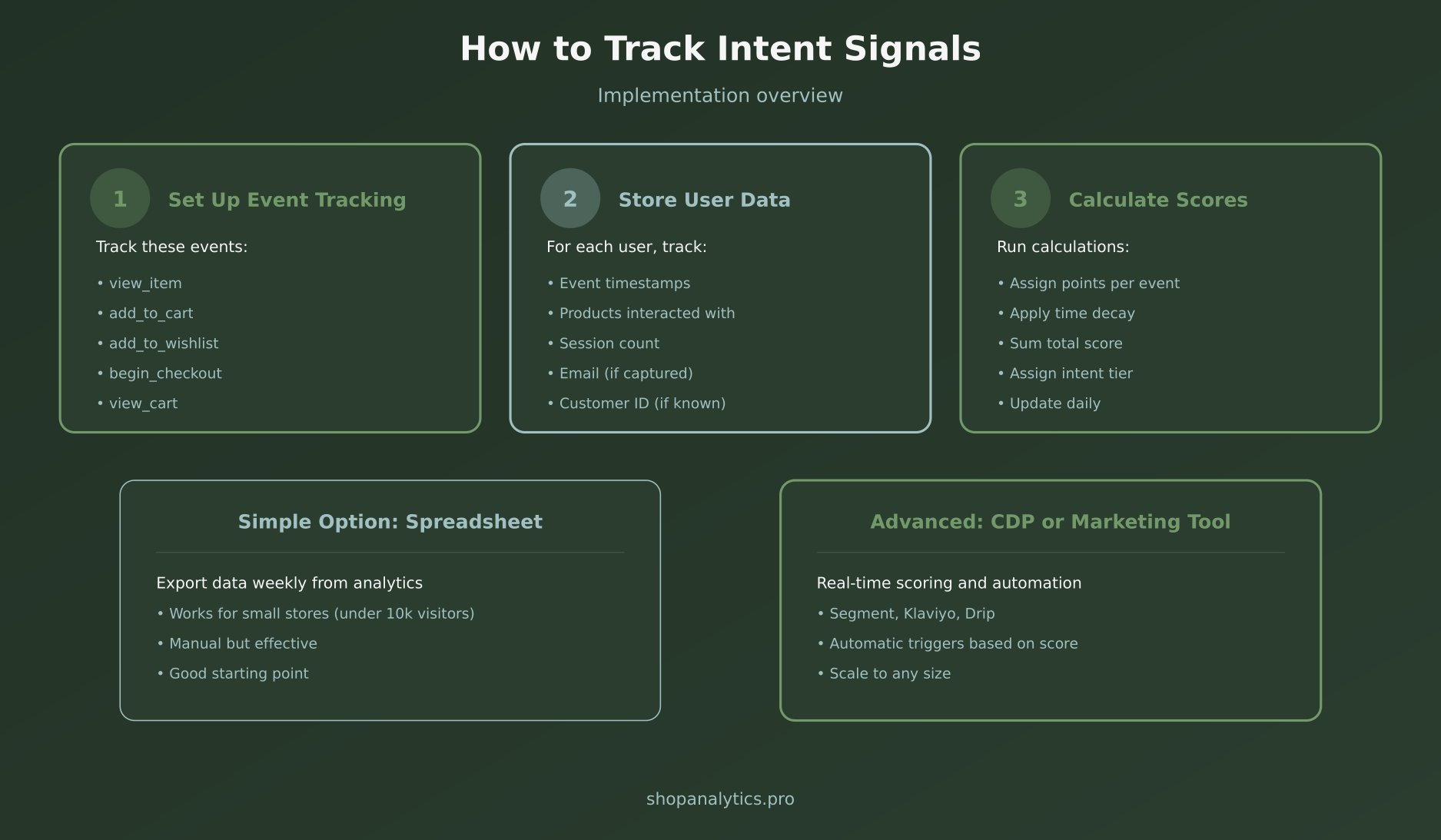
Step 1: Set Up Event Tracking
You need to track the key events that indicate intent. At minimum, capture:
- Product views (view_item)
- Cart additions (add_to_cart)
- Wishlist additions (add_to_wishlist)
- Checkout starts (begin_checkout)
- Cart views (view_cart)
Our event tracking guide covers the complete schema you should implement.
Step 2: Store User Data
For each user, you need to store:
- Event timestamps (when each action occurred)
- Products interacted with
- Session count and frequency
- Email address (if captured)
- Customer ID (if they have purchased before)
Step 3: Calculate and Update Scores
Run your scoring logic regularly (ideally daily) to:
- Assign points for new events
- Apply time decay to existing scores
- Calculate total score per user
- Assign users to intent tiers
Simple vs. Advanced Implementation
Simple approach (spreadsheet): Export your analytics and order data weekly. Calculate scores manually. Works fine for stores under 10,000 monthly visitors.
Mid-level approach: Use our ecommerce merchandising dashboard to see which products generate the strongest conversion rates and highest revenue — it helps you focus your scoring efforts on the categories that matter most.
Advanced approach (automated): Use a CDP (Customer Data Platform) or marketing automation tool like Klaviyo, Drip, or Segment to track events in real-time, calculate scores automatically, and trigger campaigns based on score changes.
Common Mistakes in Intent Tracking
A few things to watch out for as you implement intent scoring.
Treating all signals equally: A product view is not the same as starting checkout. Weight signals appropriately or your scores will be meaningless.
Ignoring time decay: Intent from last month is not the same as intent from yesterday. Without decay, your scores will be inflated with stale data.
Too many tiers: Three intent tiers (hot, warm, cold) are enough to start. More granularity adds complexity without proportional benefit.
Not acting on the data: Intent scores are useless if you do not use them to change your marketing. Make sure you have campaigns ready for each tier.
Key Takeaways
Purchase intent signals help you predict who is ready to buy and who needs more time. Here is what to remember:
- High intent signals (checkout started, cart visits, coupon applied) have 60-80% conversion probability
- Medium intent signals (cart additions, wishlist, reviews) indicate consideration stage (20-40%)
- Low intent signals (product views, searches, time on site) are early indicators (2-10%)
- Build a simple scoring system with points per signal and time decay
- Match your marketing intensity to intent level – most budget should go to high-intent customers
- Start simple with spreadsheet tracking, then automate as you grow
The stores that master intent tracking convert more visitors without increasing ad spend. They just get better at talking to the right people at the right time.